


10 Surprising Facts About Crystals You May Not Know

Crystals have fascinated people for thousands of years, and the more you learn about them, the more amazing they become. Some have existed since long before the dinosaurs, others glow under ultraviolet light, and a few can even preserve tiny clues about what Earth was like millions of years ago.
Whether you're a longtime collector or just beginning your rock-loving journey, here are 10 surprising crystal facts that might change the way you look at the natural world.
1. Some crystals are older than the dinosaurs.
Imagine holding something that existed long before dinosaurs walked the Earth.
Quartz, Zircon, and many other minerals formed hundreds of millions—or even billions—of years ago. Long before dinosaurs roamed the Earth, these crystals were already taking shape beneath the planet’s surface.
The next time you pick one up, you’re holding a tiny piece of Earth’s ancient history.

2. Not every shiny rock is technically a crystal.
It might look like one, but appearances can be deceiving.
People often use the word “crystal” to describe anything sparkly, but geology tells a different story. Minerals, rocks, natural glass like Obsidian, and even fossils are all different, even though you’ll often find them together in a rock shop.
Learning what makes each one unique is part of the fun of collecting.

3. Some crystals and rocks actually glow under ultraviolet light.
Some rocks have a hidden surprise waiting in the dark.
Minerals such as Fluorite, Calcite, and some Sodalite—and rocks like Yooperlite—can fluoresce under ultraviolet light, revealing brilliant colors you can’t see under normal lighting. It’s caused by the way certain minerals react to UV energy.
It’s one of nature’s coolest party tricks—and one that never gets old.

4. Nature rarely makes “perfect” crystals.
Those little imperfections tell a story.
Tiny fractures, inclusions, color zoning, and unusual growth patterns aren’t flaws—they’re part of how a crystal formed. Each one records a unique journey that took place deep within the Earth.
Sometimes those “imperfections” are exactly what make a crystal so special.

5. Quartz is one of the most common minerals on Earth.
It’s also one of nature’s greatest success stories.
It’s found on every continent and comes in an incredible variety of forms and colors. While Clear, Rose, and Smoky Quartz make the family connection obvious, Amethyst, Citrine, Carnelian, Agate, and Jasper are all varieties of Quartz—but there are many more.
Nature took one mineral and turned it into an amazing variety of beautiful crystals.

6. Crystals grow in predictable shapes.
Have you ever noticed that Fluorite often forms cubes or that Quartz tends to grow into six-sided prisms with pointed tips? That’s no coincidence.
As a crystal grows, its atoms arrange themselves in a repeating pattern. That internal structure determines the shape the crystal naturally wants to form—provided it has enough room to grow.
Quartz, Pyrite, Fluorite, Garnet, and many other minerals all have their own distinctive crystal habits. Even when nature gets a little messy, those underlying patterns are still there.

7. Some crystals can dissolve in water.
While many hard minerals can safely get wet, others, such as Halite (rock salt), will dissolve in water. Selenite (Satin Spar) is much softer and can become damaged after prolonged exposure.
A little water won’t hurt every crystal, but for some, it’s the last bath they’ll ever take. Knowing the difference can save a beautiful specimen from accidental damage.
That’s one reason it’s always a good idea to learn about a crystal before cleaning it.

8. Tiny ingredients create big color differences.
Pure Quartz is colorless, but the addition of small amounts of certain elements during its formation can completely change its appearance.
Iron helps create Amethyst’s purple hues. Trace amounts of other impurities can produce smoky browns, pinks, greens, blues, reds, and countless other colors found throughout the mineral world.
Sometimes only a few atoms here and there are enough to create an entirely different color. Nature is an incredible artist.

9. Some crystals trap bubbles of ancient water—and more.
They’re like natural time capsules.
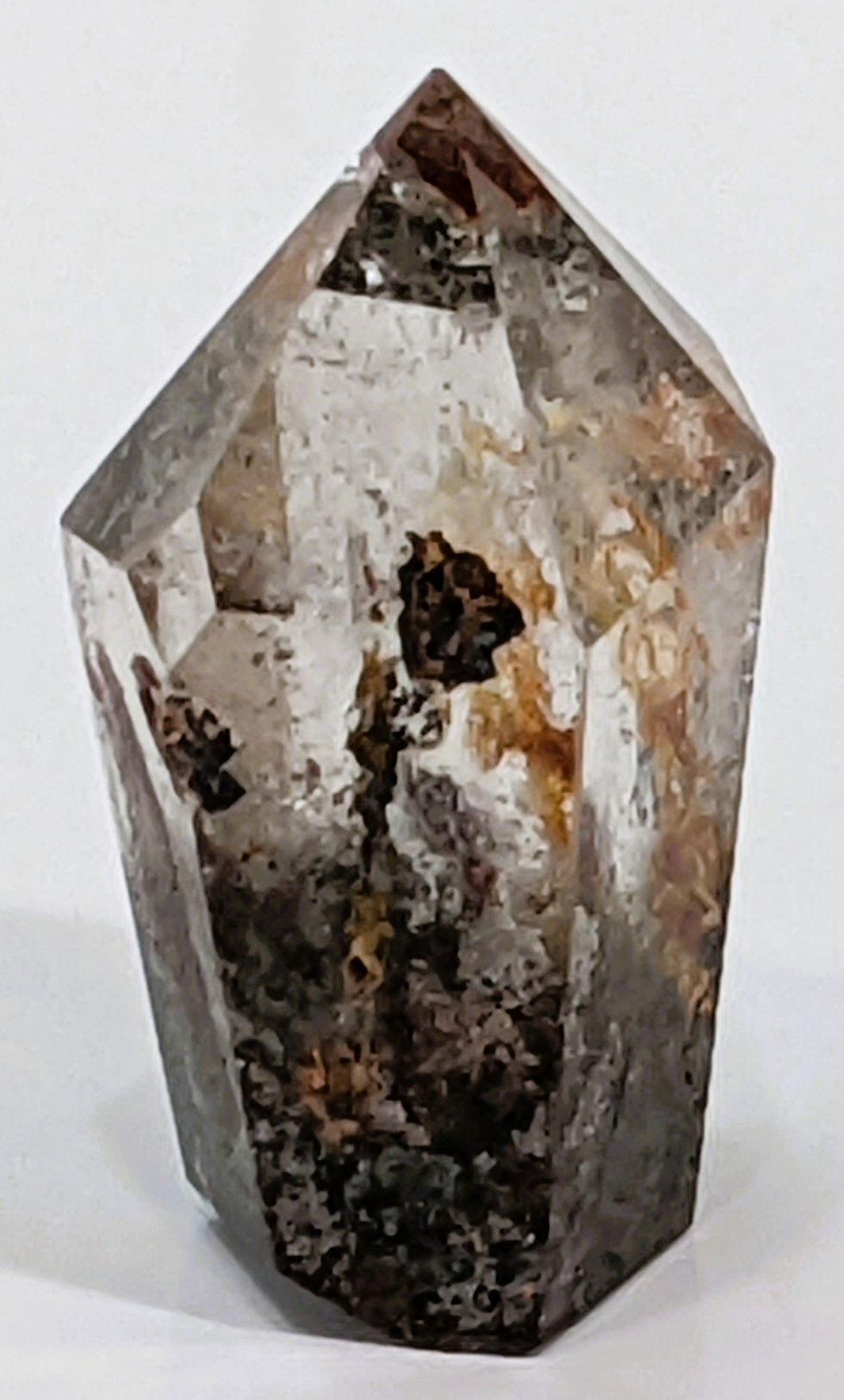
As crystals grow, they can trap little pockets of water, gas, or even other minerals inside. These inclusions preserve a snapshot of the environment in which the crystal formed. By studying them, scientists can learn what Earth’s conditions were like millions—or sometimes even billions—of years ago.
So when you spot an inclusion, you’re looking at a window into Earth’s distant past.
10. Our fascination with crystals is nothing new.
Long before gem shops and online stores existed, people admired all kinds of stones.
Ancient Egyptians carved gemstones into jewelry and amulets. The Greeks and Romans prized decorative minerals. Across many cultures, crystals have been treasured for their beauty, symbolism, craftsmanship, and rarity.
Thousands of years later, not much has changed—we're still captivated by what the Earth creates.

BONUS FACT: The device you’re reading this on contains minerals.
No, really! Your phone contains Quartz, Copper, Gold, Silver, Graphite, Lithium, and a variety of other minerals. Rocks aren’t just sitting on shelves—they’re helping you read this blog.
No picture needed for this one ... just take a look at the device you’re using!
Did any of these facts surprise you?
We’d love to know which fact was your favorite! Whether you’re a lifelong collector or just beginning your rock-loving journey, there’s always something new to discover in the world of crystals, rocks, and minerals.
Sign up for Sparkly Rewards and comment on this post to receive 50 juju Points!
Stay Sparkly! ✨
The jujujems Team


Comments